

Homeowner Knowledge Base
Which snags need urgent attention?
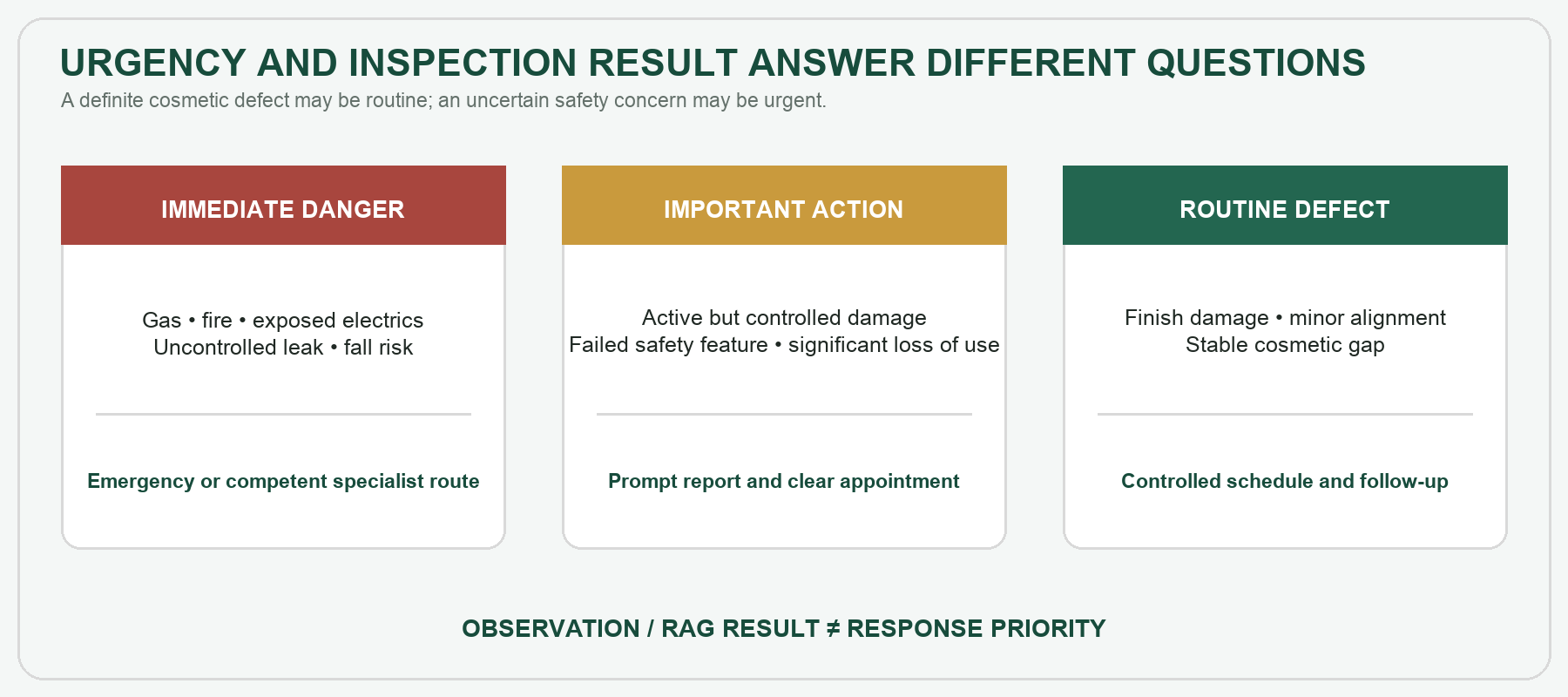
The short answer: act immediately where there is danger, an uncontrolled leak, loss of security or a condition likely to cause rapid further damage. Other defects may be important without being emergencies. Priority and inspection result are separate: a definite cosmetic defect can be routine, while an uncertain safety concern may require urgent specialist assessment.
CheckSure’s Homeowner Knowledge Base draws on practical experience of building, inspecting and resolving defects in new homes. Our aim is to explain what homeowners should reasonably expect, what may require further investigation and what steps they can take next.
When should you use an emergency route?
- A smell of gas, suspected carbon monoxide or a gas alarm.
- Smoke, fire, overheating, burning smells, exposed live parts or repeated electrical tripping associated with a fault.
- An uncontrolled internal water leak or water reaching electrical equipment.
- A loose or failed guard, handrail or other condition presenting an immediate fall risk.
- An external door or ground-floor opening that cannot be secured.
- A ceiling, wall or external element that appears unstable or at risk of falling.
- Complete loss of essential heating in severe weather where occupants may be vulnerable.
Keep people away, use emergency services or the appropriate competent specialist and follow the developer’s emergency instructions. Isolate water or electricity only where the control is known, accessible and safe to use.
What is important but not usually an emergency?
Active but controllable water entry, failed ventilation in a wet room, drainage backing up, significant damp staining, an unreliable fire door, repeated heating failure or a rapidly changing crack need prompt reporting and a clear next step. The circumstances can raise or lower priority.
What can normally follow the routine process?
Paint marks, minor finish damage, small alignment defects and stable cosmetic gaps can usually be documented and placed on the ordinary schedule. Routine does not mean acceptable or optional; it means the issue does not currently justify an emergency response.
Do not rely on a universal timetable
Generic promises such as “all leaks within 24 hours” may not reflect the contract or actual risk. Describe the effect and ask for a response proportionate to it. Applicable consumer codes and complaints procedures may set communication milestones, but these are not universal repair times for every defect.
Record priority separately from the finding
CheckSure reporting separates the observed result from an urgent-notification flag. Red means prompt attention and Amber means attention or review; neither label alone defines an emergency. Record why urgent action is recommended, who was contacted and any interim precautions taken.
If you are unsure
Do not investigate by dismantling equipment, entering unsafe areas or touching suspected live parts. Keep clear and seek advice from the appropriate emergency service, competent person, developer or managing agent.
Key takeaways
- Immediate danger and uncontrolled damage require emergency action.
- Routine defects still need clear recording and follow-up.
- Priority is not the same as the inspection result or cosmetic severity.
- Do not put yourself at risk to investigate a suspected defect.
Explore further
Explore the CheckSure Homeowner Knowledge Base for related guidance on buying, inspecting and looking after a new home.
Related Knowledge Base articles
- How to report and track snags effectively
- Getting snags fixed: developer aftercare, complaints and escalation
- Your water supply stop cock valve
- Smoke and carbon monoxide alarms
- Plumbing and heating defects: safe checks and warning signs
- Electrical snagging: safe visual checks and documents
Sources & References
Gas Safe Register — Gas emergencies: https://www.gassaferegister.co.uk/gas-emergency/
UK Government — Fire safety in the home: https://www.gov.uk/fire-safety-your-responsibilities
Independent new-home inspections
Need help with your new home?
If you are approaching completion, have recently moved in or are dealing with unresolved concerns, CheckSure can help you choose the appropriate inspection for your stage.
Important information
The Knowledge Base provides general information for homeowners in the UK. It is not a substitute for advice about an individual property and should not be treated as legal, financial, insurance, structural or other specialist advice. Requirements and warranty terms can vary according to location, construction date, provider, contract and the circumstances of the particular home.
Copyright and permitted use. © 2026 CheckSure Ltd. All rights reserved. Website content may not be reproduced without permission, except as permitted by law. See our Content Use and Copyright Policy.