
CHECKSURE – HOMEOWNER KNOWLEDGE BASE
About the Homeowner Knowledge Base
The short answer: the Homeowner Knowledge Base gives new-home buyers and owners clear, practical explanations of how new homes are built, maintained and inspected. It helps readers understand what may be normal, what should be reported and when professional advice may be appropriate.
Why we created the Knowledge Base
Buying a new home involves a large financial and emotional commitment. Buyers may need to make decisions about construction, warranties, energy performance, maintenance and defects without having worked in the industry.
The same questions arise repeatedly: Is this crack normal? Should the garden hold water? What does the warranty cover? Why is there condensation? Is the road finished? What should happen during a pre-completion inspection? A brief or general answer can leave a homeowner more uncertain than before.
We created this library to provide fuller explanations in straightforward UK English. Each article addresses a specific question and explains the construction or consumer-protection context behind it. The aim is to help people distinguish between normal characteristics, reasonable maintenance needs, unfinished work and matters that should be reported or investigated.
Experience across the new-home journey
The articles draw on practical experience from the start of construction through quality checks, handover, snagging, aftercare and defect investigation. This whole-process view helps explain not only what a homeowner can see, but how different parts of the home were intended to work together.
It also reflects the questions and misunderstandings that commonly arise after buyers collect their keys. The aim is to provide practical context that may not appear in sales literature or brief handover information.
A balanced view of new homes
New homes can provide good energy performance, modern safety features, lower initial maintenance requirements and valuable consumer protections. They can also contain snags, show inconsistent workmanship or need adjustment and drying out during the early period of occupation.
Our approach is balanced. We explain where modern standards and developer processes provide genuine benefits, while identifying situations where buyers should ask questions, retain evidence or seek further help. The purpose is to help homeowners distinguish between an inconvenience, a maintenance responsibility and a possible defect.
What you will find
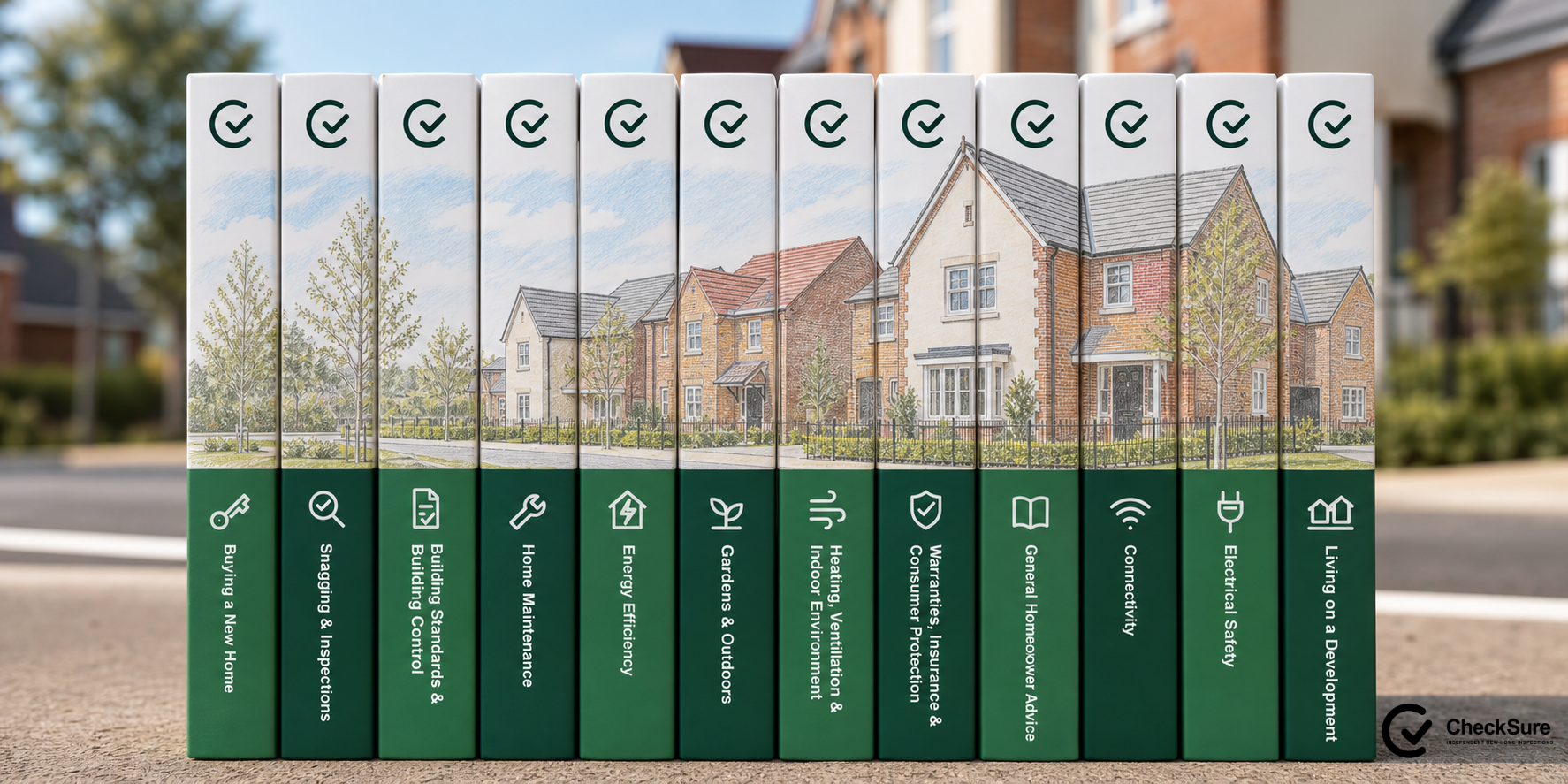
The library follows the experience of buying and owning a new home, including:
- Buying, reservation, completion and the New Homes Quality Code.
- Pre-completion inspections, snagging and reporting defects.
- Building Regulations, technical standards and warranty arrangements.
- Energy efficiency, EPCs, insulation, heating and ventilation.
- Common new-home concerns such as cracking, condensation and window damage.
- Gardens, roads, lighting and life on a development that is still under construction.
- Connectivity, electrical safety and practical home maintenance.
The articles are designed to work together. Related links let readers move from an immediate concern to the wider standards, responsibilities and maintenance information that may help explain it.
Every Knowledge Base article is available to download as a PDF. Look for the at the bottom of each article.
How to use the Knowledge Base
- Start with the article that best matches your immediate question.
- Follow the related-article links to understand the wider context.
- Check the publication and review information where guidance may change over time.
- Keep photographs, documents and dated correspondence relating to your own home.
- Seek professional or specialist advice where a matter cannot be assessed from general information.
When professional inspection may help
What general information cannot confirm
The Knowledge Base can help buyers and homeowners understand an issue, but it cannot assess the workmanship, condition or circumstances of an individual property. Two homes of the same design can have different defects, and an issue that appears minor may need closer examination.
If you are approaching completion, have recently moved in or are dealing with unresolved concerns, an independent inspection can provide a structured assessment of accessible parts of the home. The appropriate timing and scope depend on the stage of construction, access arrangements and the concerns involved.
Why inspection experience matters
A checklist can help a homeowner notice obvious items, but a professional inspection is more than a longer list. An experienced inspector understands how different parts of a home interact, where defects commonly occur, what can reasonably be inspected at a particular stage and when an observation may need specialist investigation.
A useful report should identify the location and nature of an issue, explain why it matters and give the developer enough information to investigate or rectify it. It should keep significant concerns visible without presenting every observation as equally serious.
Ready to arrange your inspection?
Use the booking form to tell us about your home and where you are in the buying or ownership journey. We will confirm the appropriate service, likely access requirements, availability and price before you commit.
Phone: 07533 917477
WhatsApp: Message CheckSure
Email: admin@checksure.co.uk
Opening hours: 8am–6pm, Monday to Friday
Important information
The Knowledge Base provides general information for homeowners in the UK. It is not a substitute for advice about an individual property and should not be treated as legal, financial, insurance, structural or other specialist advice. Requirements and warranty terms can vary according to location, construction date, provider, contract and the circumstances of the particular home.
Copyright and permitted use. © 2026 CheckSure Ltd. All rights reserved. Website content may not be reproduced without permission, except as permitted by law. See our Content Use and Copyright Policy.