

Homeowner Knowledge Base
End-of-Defects Inspection: what to check before the deadline
The short answer: an End-of-Defects Inspection is a later-stage whole-home inspection of the visible and accessible property, normally arranged before the applicable developer or warranty reporting deadline. It can identify outstanding items, failed repairs and concerns that appeared during occupation. Check the actual policy and contract dates—there is no universal deadline that applies to every new home.
CheckSure’s Homeowner Knowledge Base draws on practical experience of building, inspecting and resolving defects in new homes. Our aim is to explain what homeowners should reasonably expect, what may require further investigation and what steps they can take next.
How is this different from an early snagging inspection?
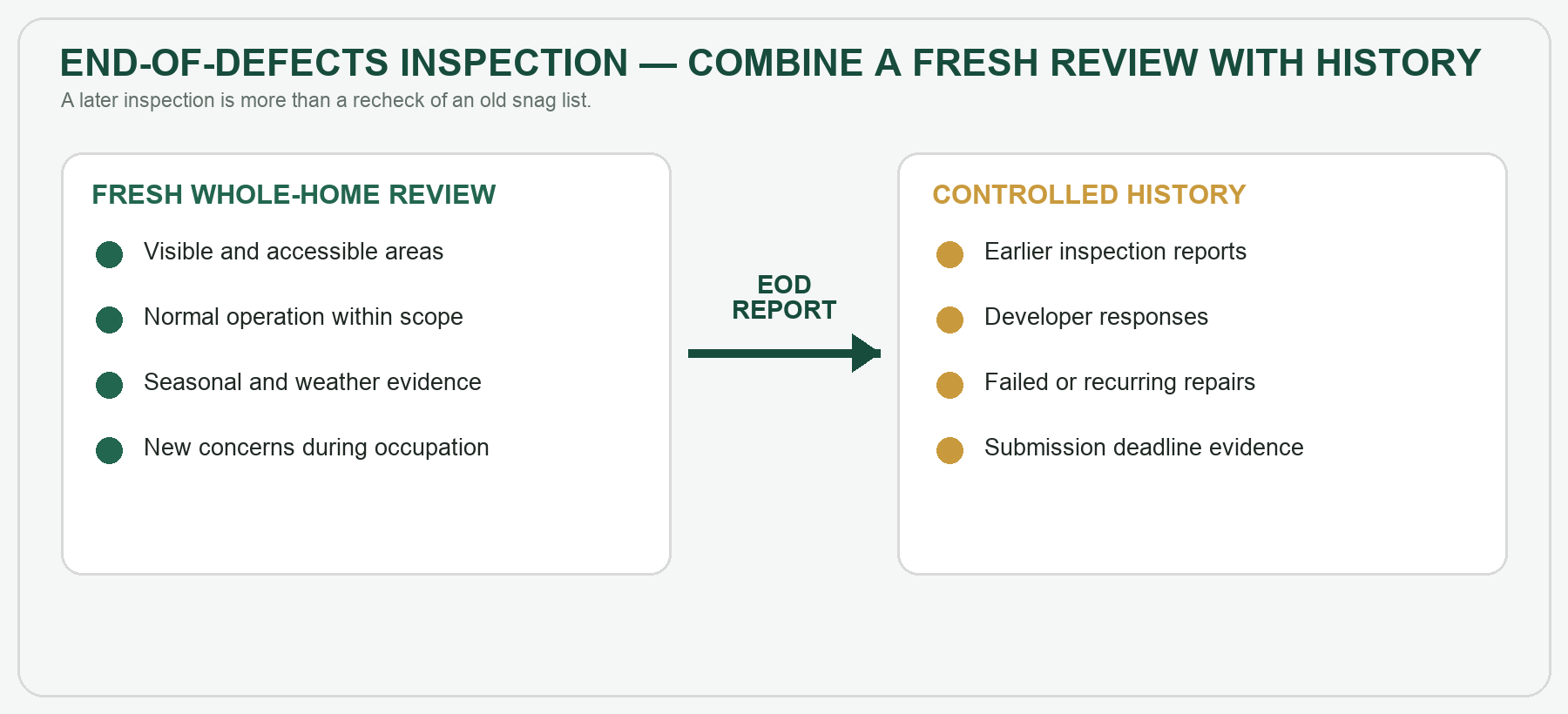
An early post-completion inspection records the home soon after access or occupation. A later inspection has the benefit of use, weather and seasonal change. It should still follow the full applicable inspection sequence rather than looking only at an old list.
When should it be arranged?
First check the completion documents, warranty certificate and developer aftercare information. Work backwards from the relevant notification deadline, allowing time for the inspection, report and submission. Do not rely on a neighbour’s date or a general statement that every period lasts two years.
What evidence should be assembled?
- The original specification, plans, options and handover documents.
- Earlier inspection reports and the controlled snag schedule.
- Developer responses, repair appointments and completion statements.
- Dated photographs of intermittent or seasonal conditions.
- Notes of leaks, heating problems, drainage behaviour, sticking doors or recurring cracks.
- Relevant service, commissioning and warranty records.
What should the inspection consider?
The inspector should review the visible and safely accessible home room by room and externally where within scope. Particular attention is given to recurring symptoms, unfinished work, failed repairs, water entry, drainage, operation of fittings and systems, movement indicators and damage caused by previous remedial work.
Seasonal and intermittent concerns
Some conditions will not occur during the visit. Photographs, dates, weather notes and a clear description can provide important context. A dry-day inspection cannot prove that a roof, threshold or garden has performed correctly during earlier rain.
What the inspection cannot establish
A visual, non-invasive inspection cannot verify every concealed component or decide contractual liability. Further testing or specialist investigation may be recommended. The report records evidence at a point in time; it does not extend a contractual or policy deadline.
Submitting the report
Use the required reporting channel, retain proof of submission and identify any existing item numbers. Separate urgent concerns from routine matters. Continue tracking each response and verify work rather than assuming attendance equals completion.
Key takeaways
- Confirm the actual applicable deadline before booking.
- Inspect the whole applicable scope, not only an earlier snag list.
- Bring together seasonal evidence and the complete repair history.
- Submit in time and retain proof; an inspection does not extend deadlines.
Explore further
Explore the CheckSure Homeowner Knowledge Base for related guidance on buying, inspecting and looking after a new home.
Related Knowledge Base articles
- How to report and track snags effectively
- Getting snags fixed: developer aftercare, complaints and escalation
- Which snags need urgent attention?
- New-home warranties explained: what buyers need to know
- Which new-home inspection do I need?
Sources & References
NHBC — What does Buildmark cover?: https://www.nhbc.co.uk/homeowners/what-does-buildmark-cover
New Homes Quality Board — The Code: https://www.nhqb.org.uk/the-code/
Independent new-home inspections
Need help with your new home?
If you are approaching completion, have recently moved in or are dealing with unresolved concerns, CheckSure can help you choose the appropriate inspection for your stage.
Important information
The Knowledge Base provides general information for homeowners in the UK. It is not a substitute for advice about an individual property and should not be treated as legal, financial, insurance, structural or other specialist advice. Requirements and warranty terms can vary according to location, construction date, provider, contract and the circumstances of the particular home.
Copyright and permitted use. © 2026 CheckSure Ltd. All rights reserved. Website content may not be reproduced without permission, except as permitted by law. See our Content Use and Copyright Policy.