

Homeowner Knowledge Base
Floors in new-build homes: movement, noise and damaged finishes
The short answer: record excessive movement, persistent noise, damaged finishes, ridges, hollows and unsafe transitions. Some materials move during drying and seasonal change, but that does not explain every symptom. The finish, construction and applicable standard must be identified before applying a tolerance or recommending repair.
CheckSure’s Homeowner Knowledge Base draws on practical experience of building, inspecting and resolving defects in new homes. Our aim is to explain what homeowners should reasonably expect, what may require further investigation and what steps they can take next.
Start with the visible finish
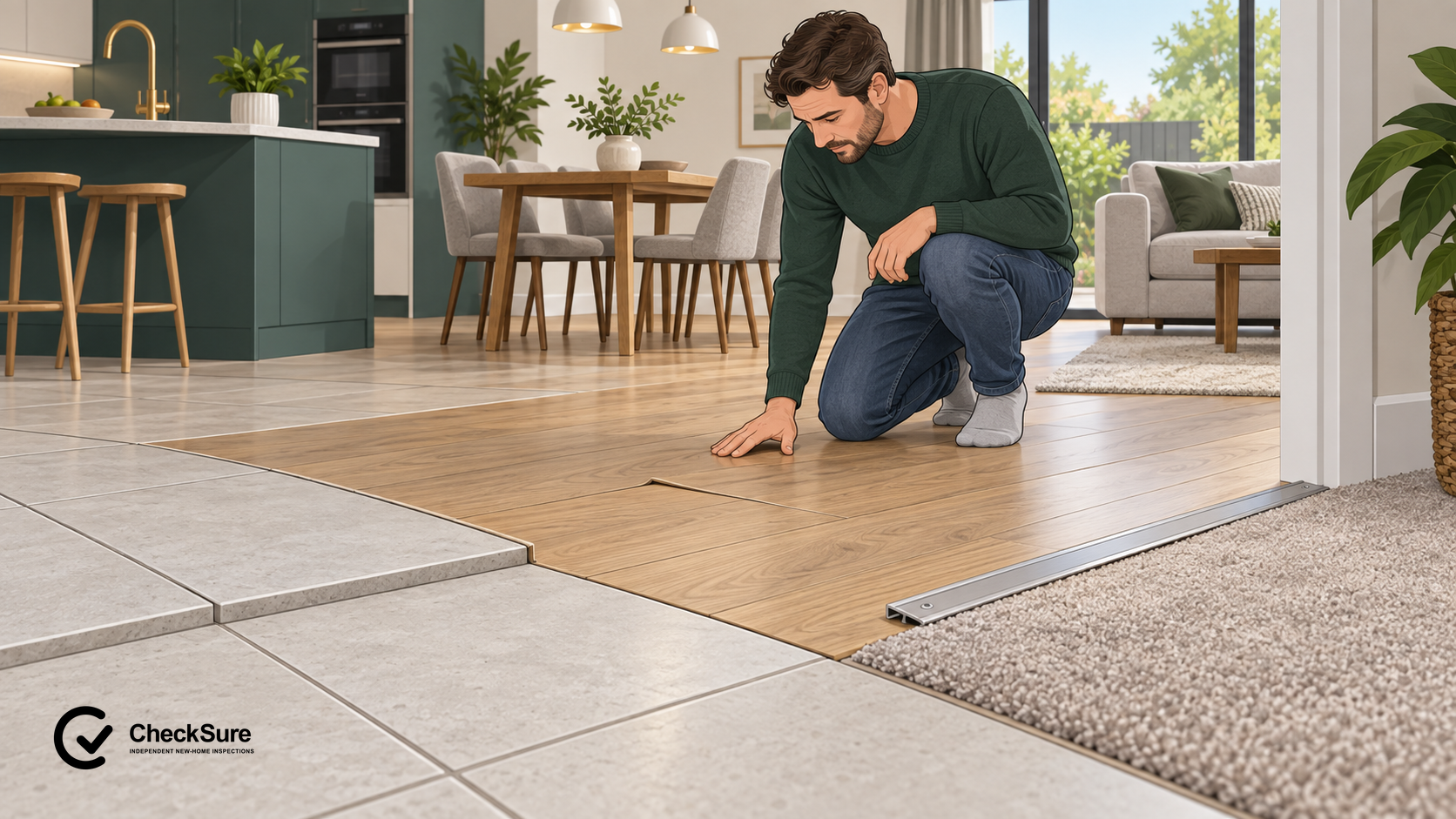
Inspect in ordinary light and from normal use positions. Record chips, scratches, staining, open joints, lifted edges and incomplete trims. Check the agreed specification: some finishes and thresholds are deliberate, while missing or loose transition strips can create damage or a trip concern.
Movement and noise
Walk normal accessible routes and note the exact location and conditions of pronounced movement, bounce, creaking or clicking. Occasional sound does not by itself identify a defect. Persistent local movement, worsening noise or a relationship with cracking and door distortion deserves investigation.
Levels and intentional slopes
A floor can be locally uneven without the whole room being out of level. Bathrooms, balconies, garages and other areas may have intended falls. Any measurement should use the method and tolerance that apply to that floor construction and finish; generic online figures should not be applied across timber floors, screeds and tiles.
Tiles and rigid finishes
- Cracked, chipped or loose-sounding areas.
- A noticeable raised edge where two tiles meet.
- Incomplete grout or perimeter movement joints.
- Poor interfaces at sanitaryware, thresholds and changes of finish.
Vinyl, laminate and timber finishes
- Lifted or curling edges, open joints and local swelling.
- Movement, hollow areas or separation during normal walking.
- Damage at doorways, radiator pipes and perimeter trims.
- Evidence of moisture that should be investigated before replacement.
Carpets and transitions
Look for damage, poor stretching, insecure edges and missing or loose threshold strips. Do not pull up fitted floor coverings during a non-invasive check. If the concern may sit below the finish, record the symptom and seek agreement before opening-up.
Before accepting a repair
Confirm that replacement pieces match reasonably, transitions are secure, doors still clear the finish and the original movement or noise has been retested. Keep evidence where work changes a larger area than the original defect.
Key takeaways
- Identify the construction and finish before applying tolerances.
- Record exact locations and conditions for movement or noise.
- Do not lift fitted finishes as part of a normal snagging check.
- Verify operation, appearance and safety after repair.
Explore further
Explore the CheckSure Homeowner Knowledge Base for related guidance on buying, inspecting and looking after a new home.
Related Knowledge Base articles
- Shrinkage and how to repair it
- How to report and track snags effectively
- End-of-Defects Inspection: what to check before the deadline
- Which snags need urgent attention?
- The hidden problems with new-build homes—and how to avoid them
Sources & References
NHBC Standards — current technical standards landing page; the applicable edition depends on when the home’s foundations were begun: https://www.nhbc.co.uk/technical/nhbc-standards
Independent new-home inspections
Need help with your new home?
If you are approaching completion, have recently moved in or are dealing with unresolved concerns, CheckSure can help you choose the appropriate inspection for your stage.
Important information
The Knowledge Base provides general information for homeowners in the UK. It is not a substitute for advice about an individual property and should not be treated as legal, financial, insurance, structural or other specialist advice. Requirements and warranty terms can vary according to location, construction date, provider, contract and the circumstances of the particular home.
Copyright and permitted use. © 2026 CheckSure Ltd. All rights reserved. Website content may not be reproduced without permission, except as permitted by law. See our Content Use and Copyright Policy.