

Homeowner Knowledge Base
New-build handover checklist and documents
The short answer: handover should leave you able to enter, secure, operate and maintain the home. Collect the documents, controls, readings and contact details before they become difficult to trace. A home demonstration explains the property; it is not a substitute for a snagging inspection.
CheckSure’s Homeowner Knowledge Base draws on practical experience of building, inspecting and resolving defects in new homes. Our aim is to explain what homeowners should reasonably expect, what may require further investigation and what steps they can take next.
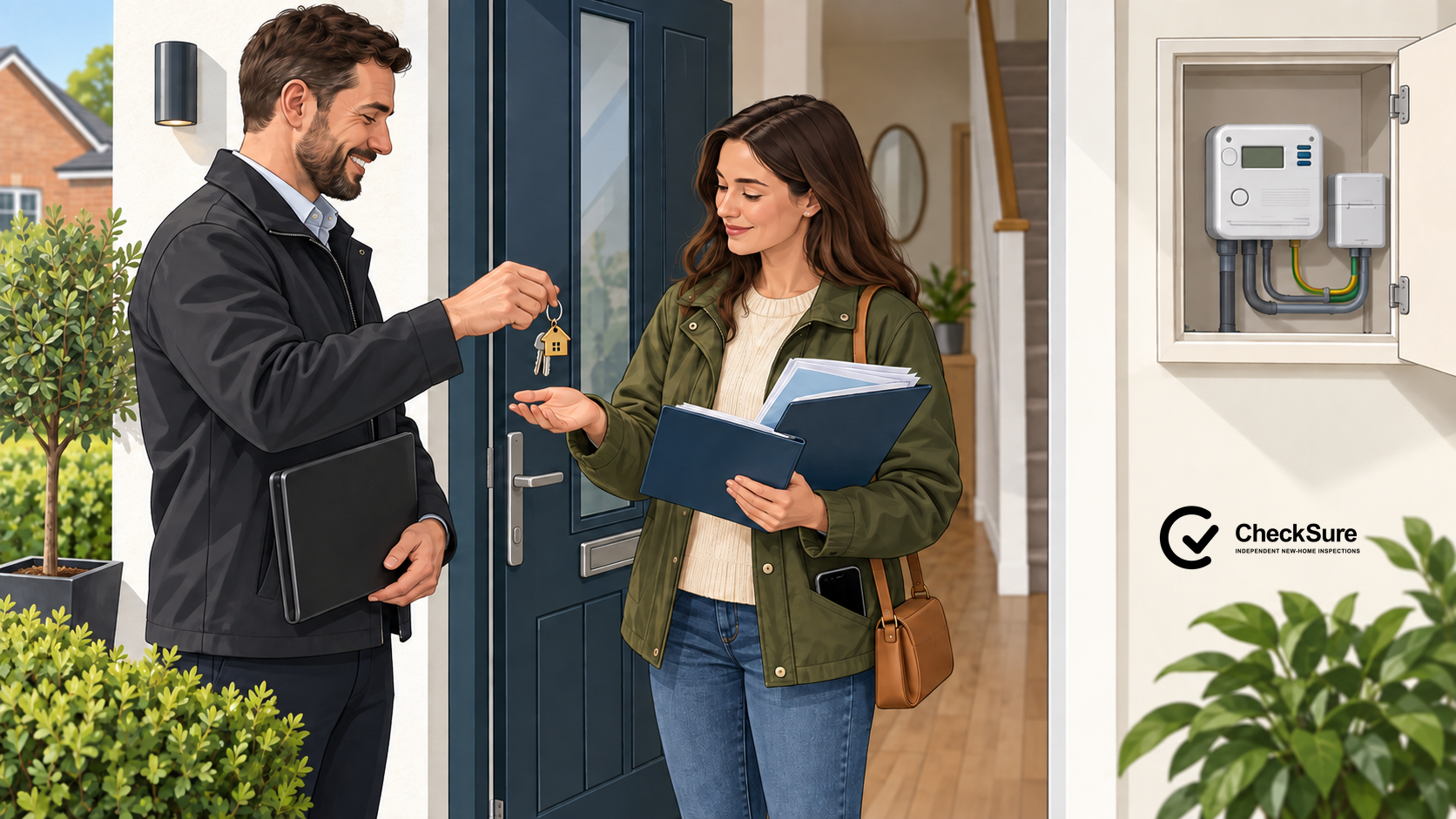
Before collecting the keys
- Confirm the completion arrangements and where keys will be released.
- Ask for the home demonstration and enough time to understand controls.
- Confirm the emergency and routine aftercare contacts.
- Keep the agreed specification, plans, options and upgrade invoices available.
- Arrange insurance and utilities as required by your conveyancer and providers.
Keys, access and security
Check that you have all keys, window keys, garage controls, communal fobs, parking permits and alarm information. Check that the main entrance secures normally. Report missing or unidentified devices promptly and do not label spare keys with the full property address.
Meters and services
- Record electricity, gas, water and heat-network readings with dated photographs.
- Identify the consumer unit, internal water stop valve and any local isolation controls explained at handover.
- Confirm how heating, hot water and ventilation controls operate.
- Ask which equipment must remain powered continuously.
- Keep the records showing how the electrical, heating and ventilation systems were set up and tested.
Documents to retain
- New-home warranty certificate, policy and contact information.
- Home User Guide and manufacturer manuals.
- The Electrical Installation Certificate and any gas, heating, ventilation or other setup and test records supplied for the home.
- Energy Performance Certificate.
- Building control completion documentation when supplied.
- Appliance registrations and guarantees.
- Paint, tile, flooring and product details useful for future repairs.
- Estate-management, parking, waste and communal-area information.
Record the condition
Take clear, dated photographs of every room, included appliance, meter and accessible external area before furniture obscures finishes. Record incomplete development work or inaccessible areas separately. Submit defects through the developer’s stated system rather than relying on the handover representative to remember a conversation.
Apartments and shared developments
Confirm the route for communal defects, lifts, access control, refuse, cycle storage, parking and emergencies. Responsibility may sit with the developer, freeholder, managing agent or another body. Keep their roles and contact details distinct.
After moving in
Test alarms using their approved test controls, review escape arrangements and make sure all occupants can find the stop valve and consumer unit. Register equipment where required, preserve receipts and start one numbered defect schedule.
Key takeaways
- Collect operational information as well as legal documents.
- Photograph meters and the initial condition.
- Keep demonstrations and inspections distinct.
- Use one written aftercare record from the outset.
Explore further
Explore the CheckSure Homeowner Knowledge Base for related guidance on buying, inspecting and looking after a new home.
Related Knowledge Base articles
- Which new-home inspection do I need?
- Your water supply stop cock valve
- Smoke and carbon monoxide alarms
- Your central heating system
- How to report and track snags effectively
- Which snags need urgent attention?
Sources & References
New Homes Quality Board — The Code: https://www.nhqb.org.uk/the-code/
Independent new-home inspections
Need help with your new home?
If you are approaching completion, have recently moved in or are dealing with unresolved concerns, CheckSure can help you choose the appropriate inspection for your stage.
Important information
The Knowledge Base provides general information for homeowners in the UK. It is not a substitute for advice about an individual property and should not be treated as legal, financial, insurance, structural or other specialist advice. Requirements and warranty terms can vary according to location, construction date, provider, contract and the circumstances of the particular home.
Copyright and permitted use. © 2026 CheckSure Ltd. All rights reserved. Website content may not be reproduced without permission, except as permitted by law. See our Content Use and Copyright Policy.