

Homeowner Knowledge Base
Getting snags fixed: developer aftercare, complaints and escalation
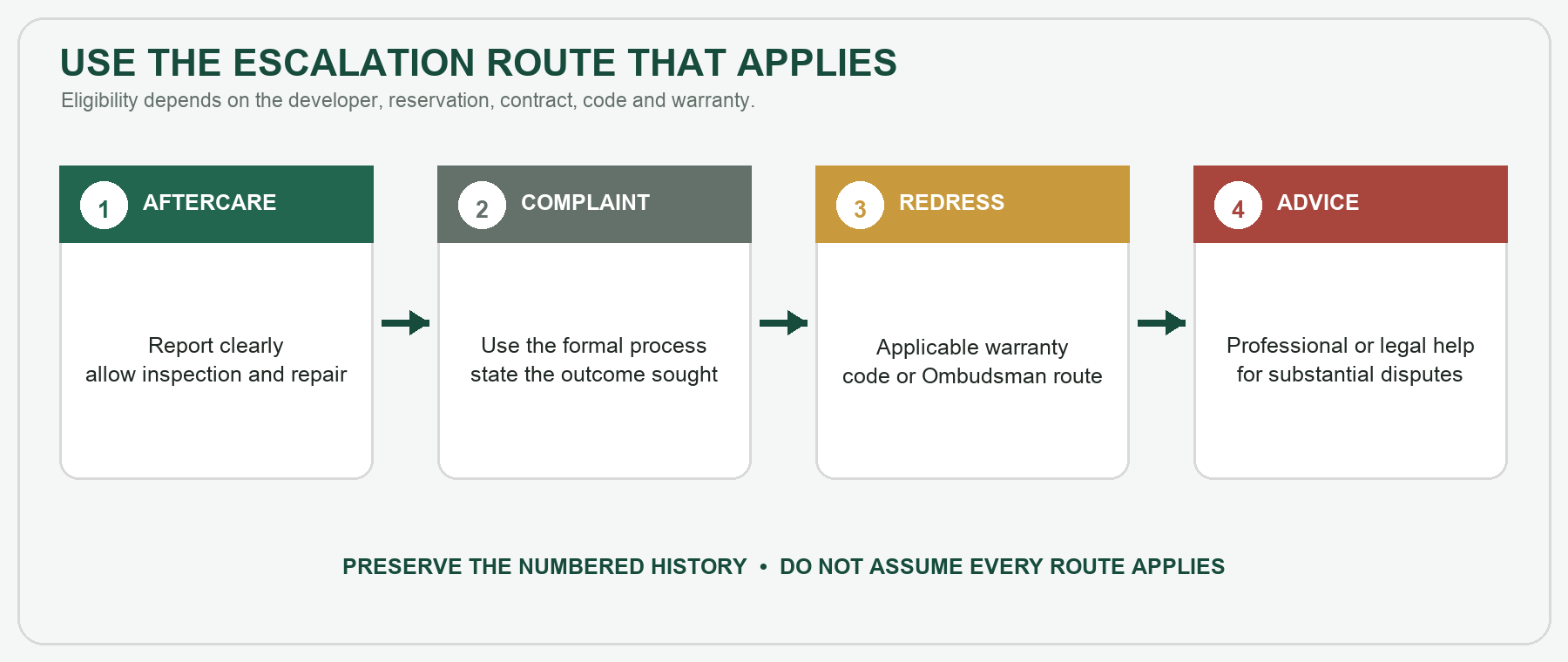
The short answer: report the issue through the developer’s stated aftercare route, keep a clear written record and give the developer a reasonable opportunity to inspect and correct work covered by its aftercare obligations. If progress stalls, move to the formal complaint process and then to the relevant warranty or redress route if eligible. The correct route depends on the purchase, contract, consumer code and warranty.
CheckSure’s Homeowner Knowledge Base draws on practical experience of building, inspecting and resolving defects in new homes. Our aim is to explain what homeowners should reasonably expect, what may require further investigation and what steps they can take next.
Start with the correct aftercare channel
Your handover information should identify the aftercare contact, emergency arrangements and complaints procedure. Submit ordinary defects through that system rather than relying on calls to individual site staff. Keep proof of delivery and use consistent item numbers.
What response should you expect?
A useful response says whether the item is accepted, needs inspection or is disputed. It should identify the responsible team and give a realistic next step. Some work depends on parts, weather, drying conditions or access. Delay should be explained rather than left open-ended.
Prepare for repair appointments
- Confirm the items and rooms included in the visit.
- Provide safe access and protect personal possessions.
- Ask what work is proposed where this is not obvious.
- Record attendance, work completed and any item that could not be addressed.
- Do not sign a broad completion statement without checking what it covers.
What if the repair is unsuccessful?
A repair may be incomplete, damage adjacent finishes or treat the appearance without resolving the cause. Reopen the numbered item, provide updated evidence and state the remaining symptom. Repeated covering or redecorating is not a satisfactory answer to continuing water entry or movement.
When should you make a formal complaint?
Use the formal procedure when significant items are rejected without adequate explanation, appointments repeatedly fail, communication stops or the proposed resolution is unsatisfactory. Label the communication as a formal complaint, identify the outcome sought and attach the numbered schedule rather than retelling the full history in several messages.
Which complaint or dispute-resolution routes may be available?
- The warranty provider, for problems covered by the policy and reported within its time limits.
- The New Homes Ombudsman Service, where the developer, reservation and complaint are eligible under the applicable New Homes Quality Code and scheme rules.
- Another consumer code or dispute-resolution scheme applying to the sale.
- Independent professional or legal advice where responsibility, loss, safety or major repair work is disputed.
Protect your evidence
Except in an emergency, do not arrange major repair work before giving the responsible party a reasonable opportunity to inspect and before checking how this may affect recovery of cost or warranty cover. Take proportionate steps to prevent further damage and keep receipts and evidence where emergency action is necessary.
This is general guidance
Contractual and legal rights vary. This article does not determine liability, interpret a warranty or replace advice on a particular dispute.
Key takeaways
- Use the developer’s stated aftercare and complaint channels.
- Keep each response and repair linked to the original numbered item.
- Escalate through the route that actually applies to the home.
- Obtain advice before arranging major non-emergency repairs while responsibility is disputed.
Explore further
Explore the CheckSure Homeowner Knowledge Base for related guidance on buying, inspecting and looking after a new home.
Related Knowledge Base articles
- How to report and track snags effectively
- End-of-Defects Inspection: what to check before the deadline
- The New Homes Quality Code: what it means for buyers
- New-home warranties explained: what buyers need to know
- Which snags need urgent attention?
Sources & References
New Homes Quality Board — The Code: https://www.nhqb.org.uk/the-code/
New Homes Quality Board — Complaint FAQ: https://www.nhqb.org.uk/faq/i-have-a-complaint-about-my-developer-new-home-who-should-i-contact/
NHBC — What does Buildmark cover?: https://www.nhbc.co.uk/homeowners/what-does-buildmark-cover
Independent new-home inspections
Need help with your new home?
If you are approaching completion, have recently moved in or are dealing with unresolved concerns, CheckSure can help you choose the appropriate inspection for your stage.
Important information
The Knowledge Base provides general information for homeowners in the UK. It is not a substitute for advice about an individual property and should not be treated as legal, financial, insurance, structural or other specialist advice. Requirements and warranty terms can vary according to location, construction date, provider, contract and the circumstances of the particular home.
Copyright and permitted use. © 2026 CheckSure Ltd. All rights reserved. Website content may not be reproduced without permission, except as permitted by law. See our Content Use and Copyright Policy.