

Homeowner Knowledge Base
Your radiators
The short answer: keep radiators clear and clean, learn what the valves do, and check for cold areas or leaks when the heating is running. A radiator that is cold at the top may contain trapped air and may be suitable for bleeding. A radiator that stays cold at the bottom, leaks, needs frequent bleeding or causes repeated pressure loss needs professional investigation.
CheckSure’s Homeowner Knowledge Base draws on practical experience of building, inspecting and resolving defects in new homes. Our aim is to explain what homeowners should reasonably expect, what may require further investigation and what steps they can take next.
Know the type of radiator
Most wet central-heating radiators contain water heated by a boiler, heat pump or heat network. They may be panel radiators, vertical radiators or heated towel rails. Electric radiators are different: they are supplied by electricity and must not be bled. Check the manufacturer’s instructions before maintenance.
A thermostatic radiator valve, often called a TRV, controls flow according to the room temperature. The valve at the other end may be a lockshield used to balance the system. Do not treat the lockshield as an everyday control or change it casually.
Routine care
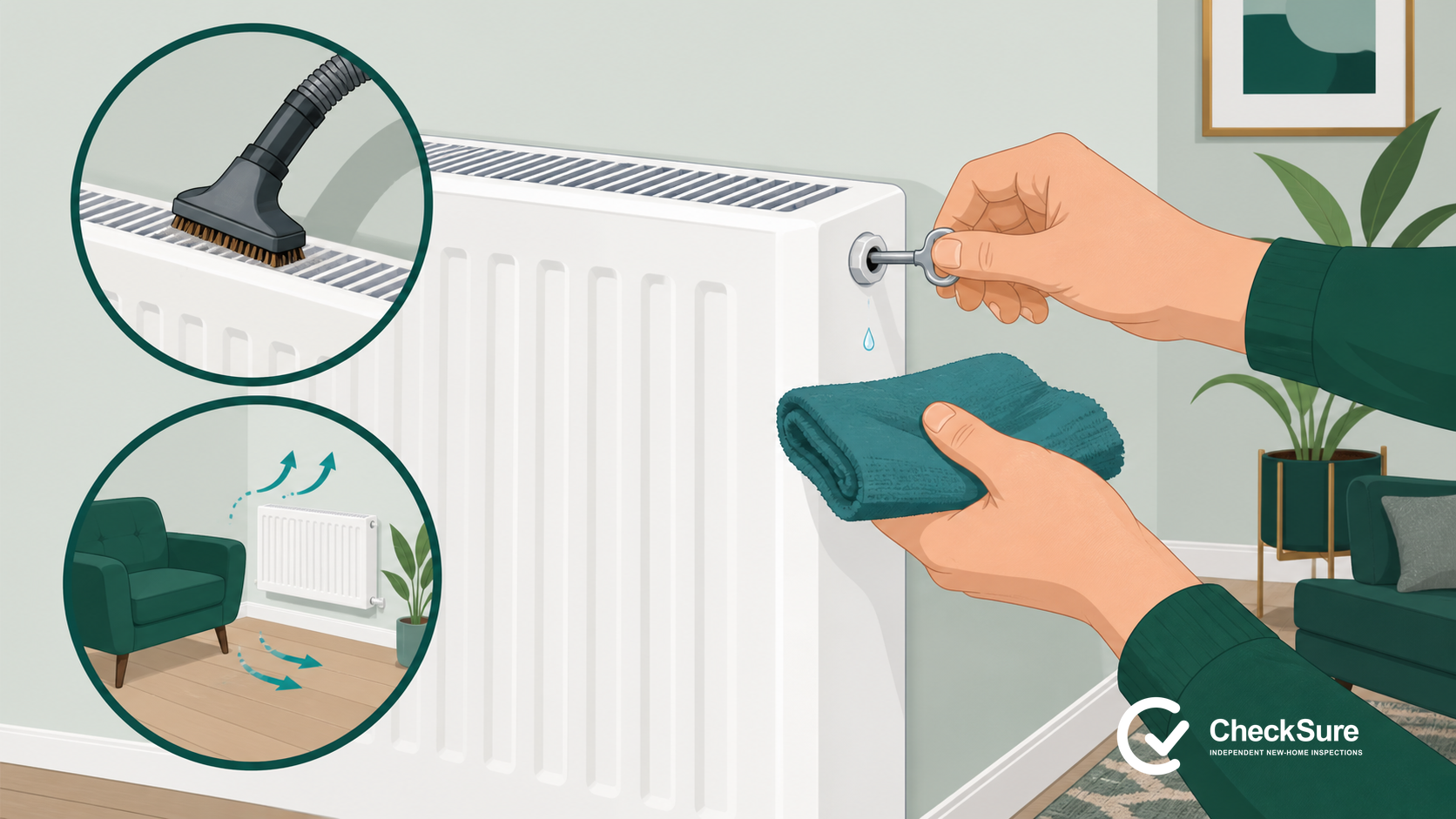
- Keep furniture, long curtains and radiator covers from blocking airflow.
- Do not dry ordinary washing on radiators; it restricts heat, can mark finishes and adds moisture to the home.
- Turn the heating off and allow the radiator to cool before cleaning.
- Vacuum dust from accessible grilles and fins with a soft attachment, then wipe the outside as the manufacturer recommends.
- Check valves, joints, walls and floors for moisture, staining or corrosion.
- Run each TRV gently through its range occasionally outside the heating season, then return it to the intended setting. Do not force a stiff valve.
Diagnose the pattern before bleeding
A cold area at the top can suggest trapped air, but a cold bottom, one cold radiator or several poorly heated rooms can point to different causes. Observe the pattern before reaching for a bleed key.
- Cold at the top while warmer below: trapped air is possible.
- Cold at the bottom: sludge, restricted flow or poor balancing is more likely; bleeding may not help.
- Completely cold: check the heating schedule and TRV first. A stuck valve, closed lockshield or system fault may need attention.
- One radiator hot while others are cool: the system may be unbalanced or controls may be set differently.
- Gurgling with frequent pressure loss: arrange investigation for a leak, air entry or another system fault.
How to bleed a suitable wet radiator
- Read the heating-system and radiator instructions. If the system is unfamiliar, in warranty or connected to a communal heat network, check who is authorised to work on it.
- Turn the heating off and allow the radiator to cool. Protect the wall and floor with a cloth and keep children away.
- Locate the bleed valve at the top of the radiator. Use the correct key or tool; do not loosen any other plug or fitting.
- Hold a cloth beneath the outlet. Turn the key slowly anti-clockwise only enough to hear air escape. Never remove the valve.
- When the hissing stops and a steady small amount of water appears, close the valve gently clockwise. Do not overtighten it.
- Wipe the area dry and check for seepage.
- Check system pressure if the manufacturer’s instructions require it. Top up only by the approved homeowner method. If pressure repeatedly falls, stop and arrange a repair.
- Turn the heating back on and check the radiator.
Leaks and urgent problems
A small seep can become damaging quickly. Turn off the heating, protect belongings and follow the Home User Guide for isolating the affected radiator only if you know which valves to use. Do not open the bleed valve on a leaking or very hot radiator simply as a general response. the safe action depends on the leak location and system.
- Report a leak promptly to the developer during the applicable aftercare period.
- Use an emergency plumber or the heat-network provider if water cannot be contained.
- Keep water away from electrical equipment and isolate electricity only if it is safe to do so.
- Do not paint over active corrosion or use leak-sealing chemicals without professional advice.
When to call a professional
- the radiator remains cold after basic control checks;
- cold areas are mainly at the bottom;
- the system needs frequent bleeding;
- pressure repeatedly drops or rises;
- a valve is seized, leaking or damaged;
- there is significant corrosion, staining or a loose wall fixing;
- the radiator is electric or connected to an unfamiliar communal system; or
- you want to remove, replace or reposition a radiator.
Radiators can be heavy and may contain very hot pressurised water. Replacement and pipework alterations can also affect system balancing, heat-pump performance, warranties and floor or wall finishes.
Key takeaways
- Check controls and the temperature pattern before deciding to bleed a radiator.
- Only bleed a wet radiator when trapped air is a plausible cause and the system instructions permit it.
- Keep radiators clean and unobstructed, and do not force valves.
- Leaks, repeated air or pressure loss, and cold bottoms need investigation.
Explore further
Explore the CheckSure Homeowner Knowledge Base for related guidance on buying, inspecting and looking after a new home.
Related Knowledge Base articles
- Your central heating system
- Your water supply stop cock valve
- Plumbing and heating defects: safe checks and warning signs
- Condensation in new-build homes: causes, prevention and practical steps
Sources & References
Stelrad — Radiator product information. Supporting distinction between wet and electric radiator types.
Stelrad — How to bleed a radiator. Supporting bleeding sequence and safety checks.
Independent new-home inspections
Need help with your new home?
If you are approaching completion, have recently moved in or are dealing with unresolved concerns, CheckSure can help you choose the appropriate inspection for your stage.
Important information
The Knowledge Base provides general information for homeowners in the UK. It is not a substitute for advice about an individual property and should not be treated as legal, financial, insurance, structural or other specialist advice. Requirements and warranty terms can vary according to location, construction date, provider, contract and the circumstances of the particular home.
Copyright and permitted use. © 2026 CheckSure Ltd. All rights reserved. Website content may not be reproduced without permission, except as permitted by law. See our Content Use and Copyright Policy.