

Homeowner Knowledge Base
Your central heating system
The short answer: newer homes can use a gas boiler, an air source heat pump, a heat network or another system, with radiators, underfloor heating or both distributing warmth. The right settings and maintenance depend on the equipment installed. Keep the handover documents, learn the controls, carry out only simple owner checks and use a competent professional for servicing, faults and changes to sealed, gas, electrical or refrigerant components.
CheckSure’s Homeowner Knowledge Base draws on practical experience of building, inspecting and resolving defects in new homes. Our aim is to explain what homeowners should reasonably expect, what may require further investigation and what steps they can take next.
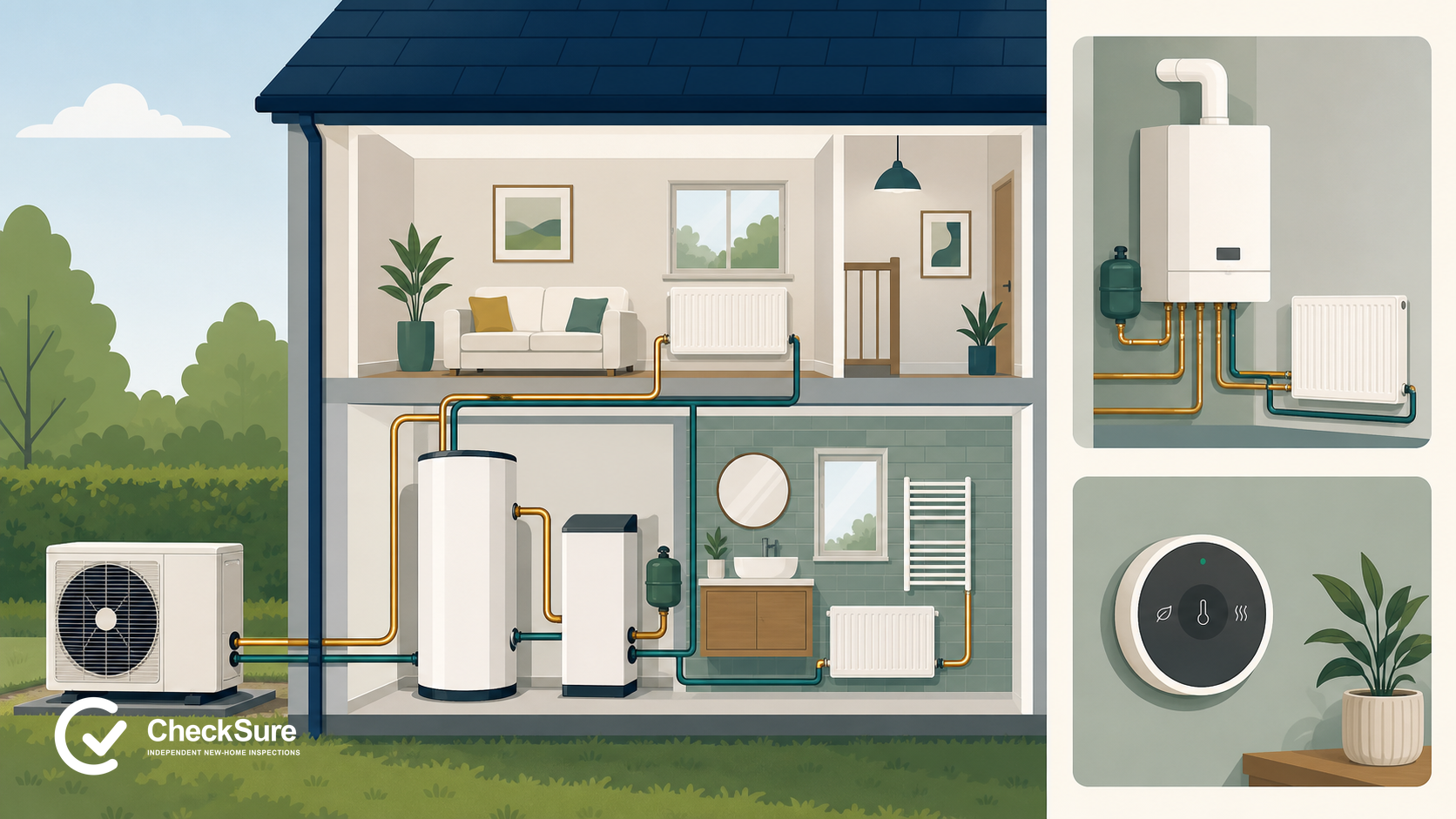
Start by identifying what you have
Find the make and model of the heat source, controls, hot-water cylinder and any ventilation equipment. The correct operating routine depends on the system; advice for a gas boiler may be unsuitable for a heat pump or communal system.
Do not assume that every new home has a combi boiler or that every heat pump works like a boiler. Look at the Home User Guide, Energy Performance Certificate, commissioning records and manufacturer instructions. Record the make and model of the heat source, hot-water cylinder, controls and any ventilation system.
- A gas boiler burns gas to heat water. A combi boiler usually produces hot water on demand; a system boiler normally works with a stored-water cylinder.
- An air source heat pump transfers heat from outside air into the home. Many systems run for longer periods at lower water temperatures than a gas boiler.
- A ground source heat pump draws heat from the ground through buried pipework.
- A heat network supplies heat from a shared energy centre. The home may contain a heat interface unit rather than its own boiler.
- Direct electric systems may use panel heaters, storage heaters or an electric boiler. These have different controls and servicing needs.
A home completed from 2024 may still legally have gas heating, depending on the design, approval date and applicable transitional provisions. In England, the Future Homes Standard is due to take effect on 24 March 2027 with a transitional period. it is expected to make low-carbon heating, such as heat pumps or heat networks, normal in newly approved homes. The rules differ across the UK.
Learn the controls before changing settings
Modern controls may include a programmer, room thermostat, thermostatic radiator valves, weather compensation, smart controls, heat-pump schedules and separate hot-water settings. Begin with the installer’s commissioned settings. Large, frequent changes can reduce comfort or efficiency, particularly with heat pumps and underfloor heating.
- Know which control sets the overall schedule and which controls individual rooms.
- Keep thermostats and temperature sensors clear of curtains, heat sources and strong draughts.
- Use holiday or frost-protection modes as instructed rather than switching the whole system off in cold weather.
- Do not disable safety controls, automatic pump cycles or legionella protection functions on stored hot-water systems.
A simple homeowner routine
Monthly during the heating season
- Run the heating and check that rooms warm as expected.
- Look for leaks, staining, unusual pressure changes, repeated error codes or new noises.
- Check accessible radiator valves and keep furniture from blocking heat emitters.
- Check the outdoor heat-pump unit, if fitted, has clear airflow and is not obstructed by leaves, rubbish or stored items. Do not remove guards or use sharp tools on ice.
Before winter
- Test the heating before the first cold spell so there is time to arrange help.
- Confirm that schedules, thermostats and batteries in wireless controls work.
- Read the procedure for topping up pressure only if the manufacturer says this is a homeowner task. Repeated pressure loss is a fault, not a routine need.
- Arrange any service required by the manufacturer, warranty, landlord or heat-network provider.
Servicing and professional work
Gas appliances must be worked on by a Gas Safe registered engineer competent for that appliance. Heat pumps and refrigeration circuits require appropriately qualified technicians, and electrical work may need a competent electrician. A heat-network customer should follow the provider’s reporting route. Keep service and repair records because they may support warranties and future diagnosis.
Do not remove boiler covers, alter combustion settings, add chemicals, drain a sealed system, change design flow temperatures or rebalance unfamiliar systems unless the manufacturer’s homeowner instructions specifically permit it.
Common signs that need attention
- no heat or hot water after checking the normal controls and power supply;
- repeated loss or rise of system pressure;
- water leaks, corrosion or staining;
- burning smells, electrical tripping or damaged cables;
- persistent banging, grinding or unusually loud pump or fan noise;
- an outdoor heat-pump unit repeatedly icing without clearing through its normal defrost cycle;
- some rooms consistently overheating or remaining cold; or
- a carbon monoxide alarm sounding or concern about combustion fumes.
If you smell gas, suspect carbon monoxide or believe there is an immediate electrical or fire risk, leave the area and follow the relevant emergency guidance. Do not continue fault-finding.
Radiators and underfloor heating
Radiators may need cleaning, valve checks or occasional bleeding. see “Your radiators” for the safe sequence and warning signs. Underfloor heating responds slowly and should normally be adjusted gradually. Do not drill floors or change manifolds without accurate service information and competent advice.
Key takeaways
- Identify the installed heat source and controls before applying generic advice.
- Keep handover, commissioning, warranty and service information together.
- Carry out simple checks, but leave sealed, gas, electrical and refrigerant work to competent professionals.
- Repeated pressure loss, leaks, error codes or uneven heating are reasons to investigate, not simply reset the system indefinitely.
Explore further
Explore the CheckSure Homeowner Knowledge Base for related guidance on buying, inspecting and looking after a new home.
Related Knowledge Base articles
- Your radiators
- Condensation in new-build homes: causes, prevention and practical steps
- Why new-build homes are more energy efficient
- Part L Building Regulations: what new-home buyers need to know
- Plumbing and heating defects: safe checks and warning signs
Sources & References
UK Government — Future Homes Standard and Home Energy Model updates, 24 March 2026.
Independent new-home inspections
Need help with your new home?
If you are approaching completion, have recently moved in or are dealing with unresolved concerns, CheckSure can help you choose the appropriate inspection for your stage.
Important information
The Knowledge Base provides general information for homeowners in the UK. It is not a substitute for advice about an individual property and should not be treated as legal, financial, insurance, structural or other specialist advice. Requirements and warranty terms can vary according to location, construction date, provider, contract and the circumstances of the particular home.
Copyright and permitted use. © 2026 CheckSure Ltd. All rights reserved. Website content may not be reproduced without permission, except as permitted by law. See our Content Use and Copyright Policy.