

Homeowner Knowledge Base
Windows and doors: installation defects or seasonal adjustment?
The short answer: timber and buildings can move with moisture and temperature, so some doors need adjustment during early occupation. Persistent failure to latch, damaged seals, water entry, insecure hardware or a safety-device fault should not be dismissed as seasonal movement. Record the symptom and conditions before anyone alters the fitting.
CheckSure’s Homeowner Knowledge Base draws on practical experience of building, inspecting and resolving defects in new homes. Our aim is to explain what homeowners should reasonably expect, what may require further investigation and what steps they can take next.
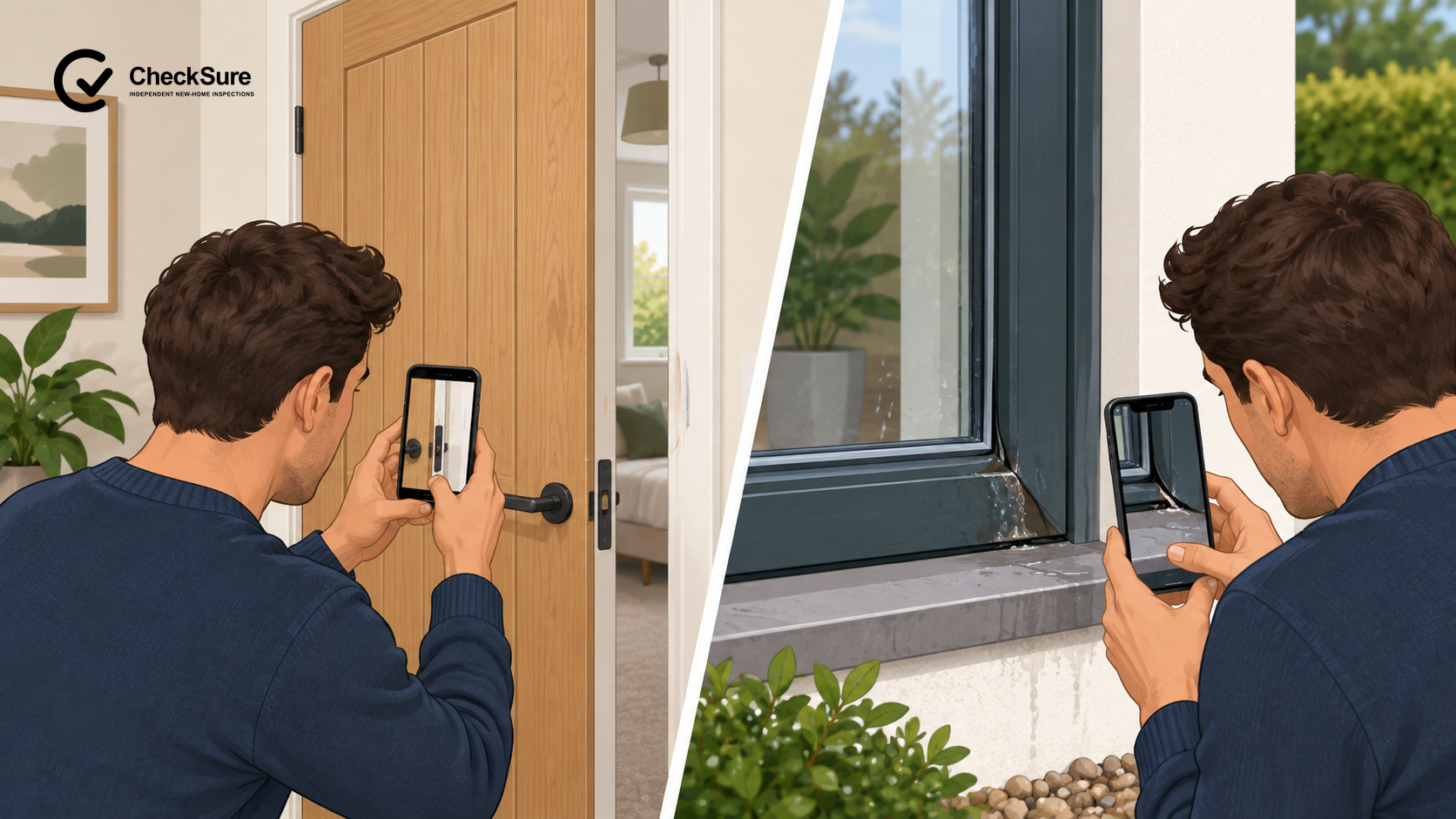
Check normal operation
Open and close each accessible window or door normally. Record sticking, frame contact, excessive force, failure to latch, rattle, loose handles or hinge movement. Do not force an obstructed unit or repeatedly slam it to obtain closure.
Security and external weathering
- External doors and accessible windows lock using the supplied controls.
- Keys, handles and cylinders operate without obvious damage.
- Visible seals are present, engaged and not displaced.
- Thresholds and frame drainage paths appear complete and unobstructed.
- There is no visible water entry, daylight through an unintended opening or continuing pronounced draught.
Seasonal adjustment
Timber doors and frames can change as construction moisture reduces and indoor humidity varies. A minor adjustment may be reasonable, but seasonal explanation should be supported by the symptom and timing. A door that cannot secure, a window that will not close or recurring severe binding needs prompt attention.
Glass and frames
Record chips, cracks, scratches, failed sealed units and damaged frames under the applicable viewing conditions. Do not judge glass by shining an extreme light along the surface or relying only on a close-up photograph. SNG-002 explains scratches and visual inspection in more detail.
Fire doors require separate treatment
Do not apply ordinary internal-door tolerances to a fire door. The complete door assembly, manufacturer information, floor finish, seals, closer and applicable fire-safety requirements all matter. A visual snagging inspection does not assess or certify fire safety, fire resistance or regulatory compliance. Do not adjust, plane or remove a closer without competent assessment. A fire door that does not close into its frame should be reported promptly.
Before and after adjustment
Photograph contact marks, gaps and hardware before work. After adjustment, check swing, latch, lock, seals and adjacent decoration. A repair that creates a new gap, weakens security or damages the finish is not complete merely because the original sticking has reduced.
When further investigation is needed
Continuing water entry, repeated failure of a double- or triple-glazed unit, distortion, related cracking or several openings changing together may justify wider investigation. A simple adjustment should not conceal a building-movement or weatherproofing concern.
Key takeaways
- Record operation and conditions before adjustment.
- Treat security, water entry and safety devices promptly.
- Do not apply ordinary-door rules to fire doors.
- Verify the full operation after repair, not only the original symptom.
Explore further
Explore the CheckSure Homeowner Knowledge Base for related guidance on buying, inspecting and looking after a new home.
Related Knowledge Base articles
- Windows and doors: seasonal adjustment in a new-build home
- Scratches on windows: how perfect should the glass be in a new home?
- Exterior and weatherproofing checks for a new-build home
- How to report and track snags effectively
- The hidden problems with new-build homes—and how to avoid them
Sources & References
UK Government — Approved Document B: fire safety: https://www.gov.uk/government/publications/fire-safety-approved-document-b
NHBC Standards — current technical standards landing page: https://www.nhbc.co.uk/technical/nhbc-standards
Independent new-home inspections
Need help with your new home?
If you are approaching completion, have recently moved in or are dealing with unresolved concerns, CheckSure can help you choose the appropriate inspection for your stage.
Important information
The Knowledge Base provides general information for homeowners in the UK. It is not a substitute for advice about an individual property and should not be treated as legal, financial, insurance, structural or other specialist advice. Requirements and warranty terms can vary according to location, construction date, provider, contract and the circumstances of the particular home.
Copyright and permitted use. © 2026 CheckSure Ltd. All rights reserved. Website content may not be reproduced without permission, except as permitted by law. See our Content Use and Copyright Policy.